The Philippines already had the law. Republic Act 11904 said the country would measure its creative economy. The Philippine Statistics Authority had run a pilot compilation. The Department of Trade and Industry had commissioned scope and mapping work. On paper, the pieces were there.
What wasn’t there was a way to decide. No settled definition of what counted as creative. No agreed method. No shared view of who owned which part of the problem. Two agencies, both doing serious work, both waiting on choices that neither could make alone. Different frameworks would produce different answers about the size of the sector, and nobody wanted to be the one who picked wrong.
That’s the assignment I was brought into, co-leading with Lai del Rosario. Not to arrive with a model in a box. To help two institutions build the capability to choose, defend and repeat one of their own.
Diagnose before teaching
We started by finding out where people actually were. Pre-meetings and a survey across both agencies, asking what participants already knew, what they expected, and what they were quietly unsure about. That last question did most of the work.
The design that came out of it moved deliberately, from understanding the starting point and agreeing the shared ambition to comparing the options, testing the preferred approach and committing to a route. In the programme’s own shorthand, me, then they, then we, then next steps. Every activity had to do one of three things. It had to expose an assumption, test an option, or advance a decision someone had put their name to. Anything that only transferred information could be a handout.
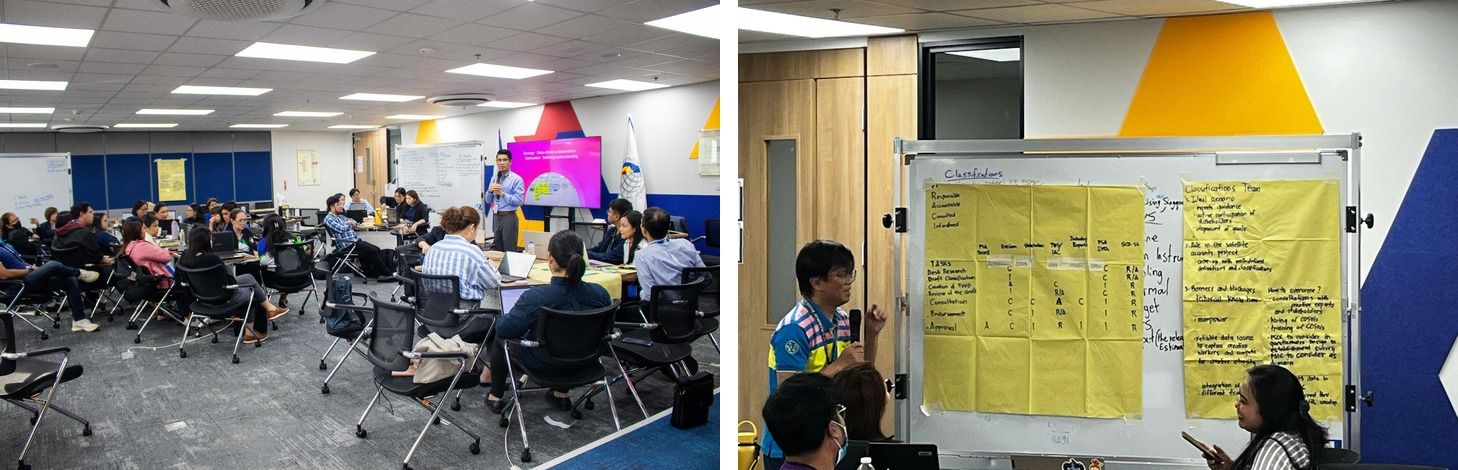
The part I’d defend hardest was the Burning Questions session. We invited the confusion into the room early. What don’t you understand, what do you disagree with, what are you afraid to ask in front of the other agency? Disagreement stopped being a disruption to manage and became the design agenda. You cannot get two institutions to commit to a hard methodological choice while they are still being polite with each other.
Global frameworks, Philippine choices
We put the international models side by side rather than recommending one. DCMS, UNESCO, WIPO, UNCTAD, Nesta, and the Philippine statistical codes, with their assumptions visible. The same went for the methods, including satellite-account logic, input-output analysis, multipliers for output, employment, value added and tax, and the bottom-up research that fills the gaps macro estimates can’t reach.
Then we stress-tested it. We did deep dives across film, video games, music and design, four value chains that behave nothing like each other. If a classification could survive all four, it could survive the sector.
The technical value wasn’t choosing the most sophisticated method. It was helping two institutions choose an approach they could defend, repeat and improve.
The soft systems mattered as much as the hard ones, from stakeholder maps and an organigram to journey mapping, a RACI and an action plan. These unglamorous documents answer the question every technical programme leaves hanging, which is who does this on Monday.
What happened next, honestly
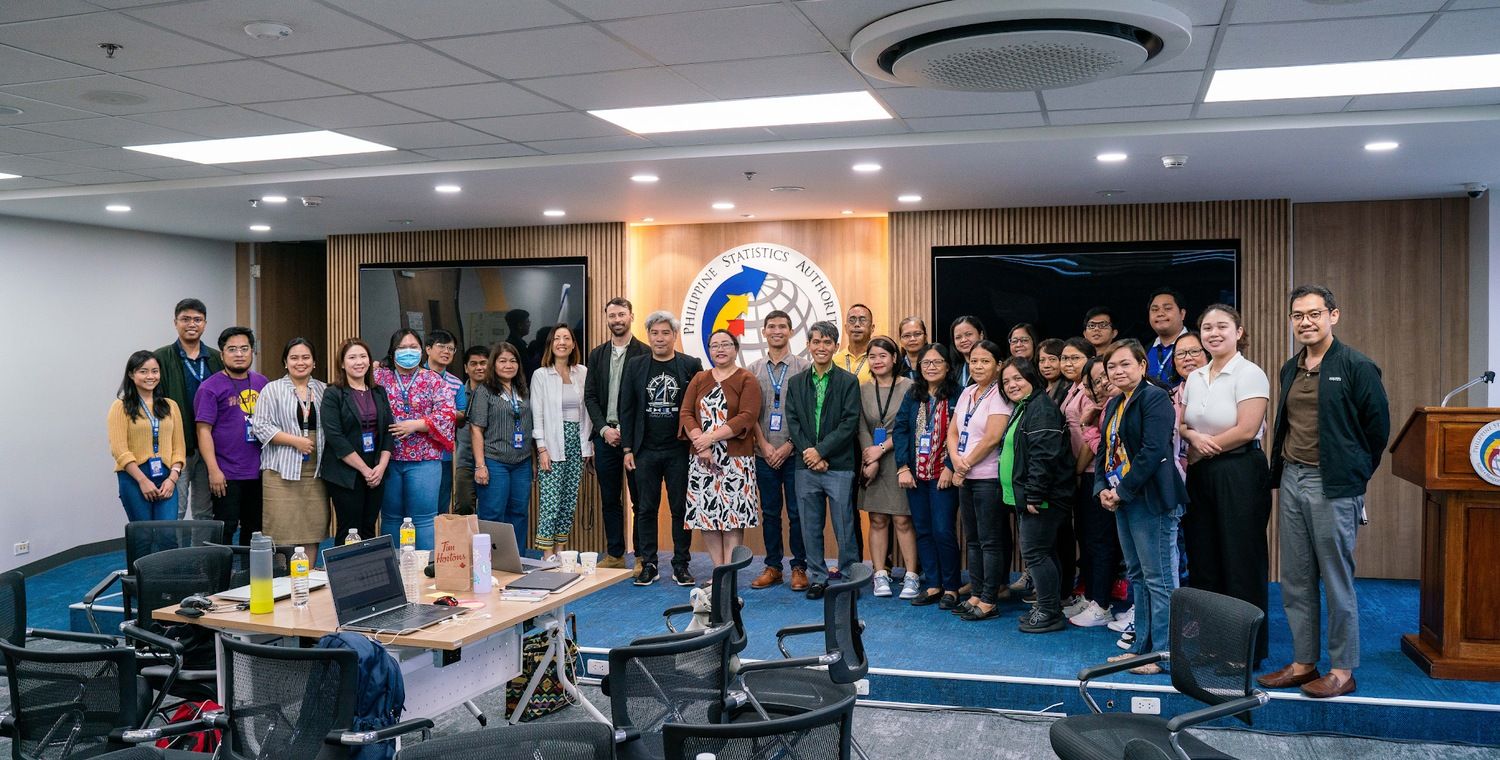
The immediate outcome was the one we were hired for, which was stronger inter-agency capability, a defensible scope, a method portfolio with its limitations written down, and a three-year roadmap with named owners. Mentoring and check-ins carried on after the intensive finished.
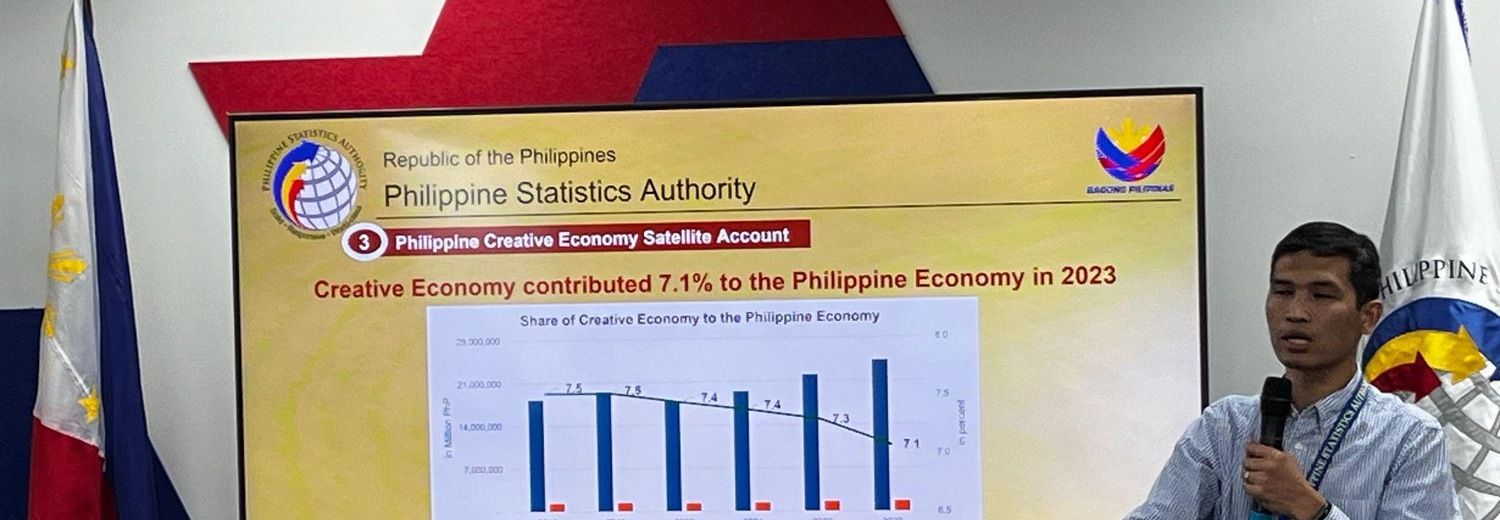
What came afterwards belongs to the Philippines, not to me, and I want to be precise about that. In March 2025 PSA released preliminary creative-economy estimates and set out its intention to institutionalise the account. That November it adopted the Philippine Standard Creative Classification System, covering 317 industries, 409 goods and services and 114 occupations. In 2026 it published further estimates and joined the launch of a national Creative Ecosystem Diagnostic Report.
The law predated us. The pilot predated us. A week of workshops in Manila does not cause a national statistical system. What it can do is help the people inside that system agree what to count, how to count it, and who acts next, and that is what this one did.
The close
Governments don’t usually struggle to measure a creative economy because the technique is beyond them. They struggle because measurement forces choices about what a country values, and those choices sit across departments that were never designed to make them together.
I could have delivered a methodology in a week. It would have been technically fine and quietly ignored, because nobody in the room would have owned it. Instead there’s a scope two agencies argued their way to, a plan with their names against it, and an account that has kept moving for two years without me anywhere near it. That was the job.